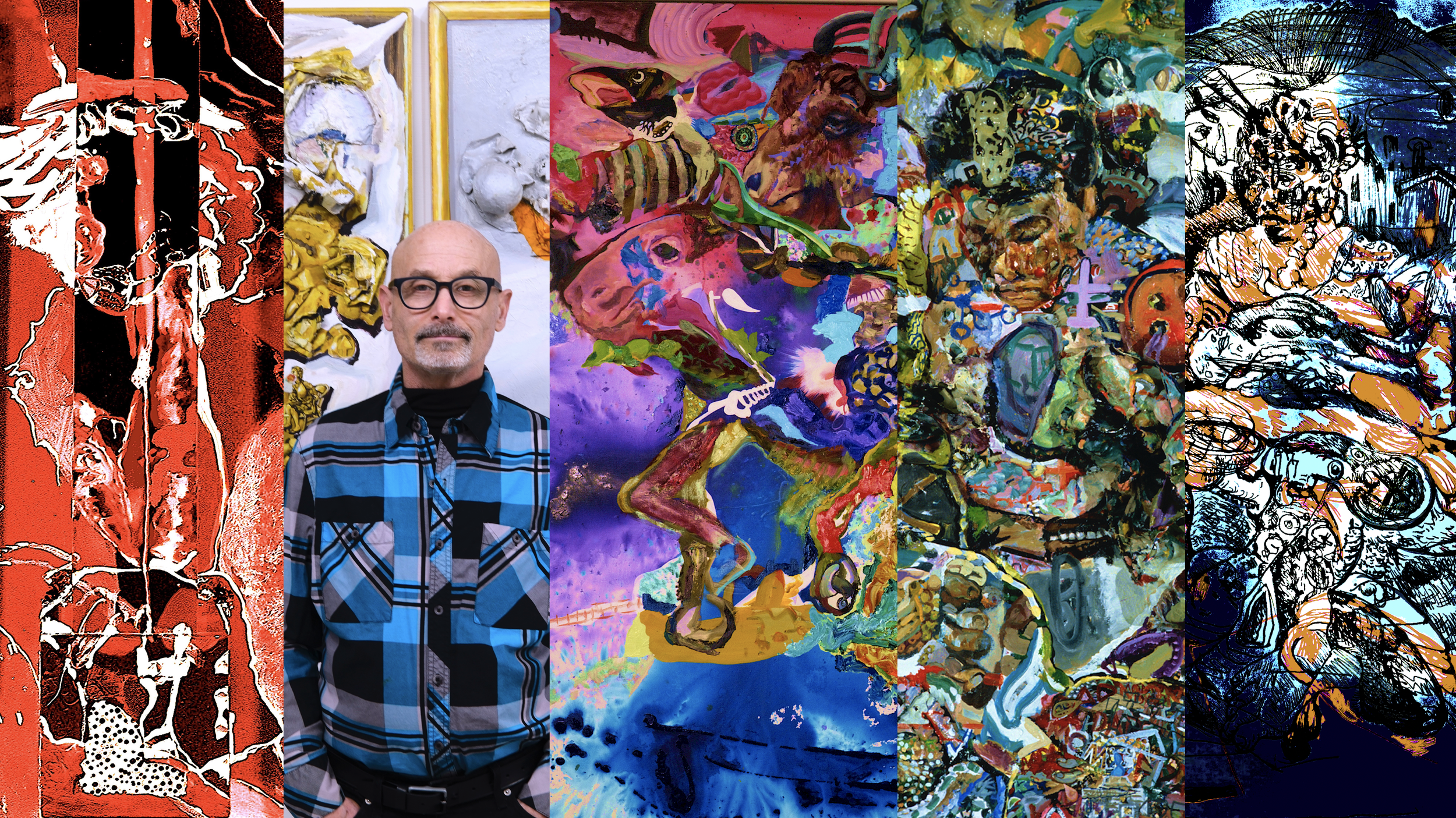
BIO
Keith Sklar (b. New York) currently lives and works in Chicago. He earned an MA from NYU Steinhardt School in New York and a BA from Wesleyan University in Connecticut. He has lived and worked in New York, Oakland, San Francisco and Los Angeles, and these communities have helped shape his path as an artist. His solo exhibitions include: P.P.O.W, (NY); Rosamund Felsen Gallery, Santa Monica; Ben Maltz Gallery at Otis College of Art and Design, (LA); Dorsch Gallery, Miami; and Giampietro Gallery, New Haven. Notable group exhibitions include: Suffering From Realness at Mass MoCA (2019); Strange at Berkeley Art Museum and Pacific Film Archive (2019); Wallpainting at University of Texas at San Antonio (2005); LA at Kaus at Kaus Australis, Rotterdam, the Netherlands (2005); SouthwestNET: PHX/LA at Scottsdale Museum of Contemporary Art (2004); Made in California: Art, Image and Identity, 1900-2000, at LA County Museum of Art, CA (2001), and LA: Post Cool at San Jose Museum of Art (2001).
Sklar’s works are in the collections of SFMoMA, Oakland Museum of California and Berkeley Art Museum and Pacific Film Archive. Sklar’s grants and awards include: Robert Rauschenberg Foundation Residency on Captiva (2014), Brooklyn Arts Council, Arts in Education grant. (2012); California Arts Council (CAC) Fellowship in Visual Arts (Painting) and multiple CAC Artist-in-Communities Grants. Selected Press and media include: LA Times, NY Times, Gorky’s Granddaughter, Boston Globe, SF Chronicle, Arizona Republic, San Diego Union Tribune, LA Weekly, Art in America and ARTnews. Early in his career, Sklar focused on creating public murals in Oakland and San Francisco. Two of these projects, Mitzvah and Grand Performance (co-created with Daniel Galvez) were declared Oakland City Landmarks.
Restoration of the Landmark Grand Performance Mural (1984), headed by collaborating artist Daniel Galvez, is scheduled to begin October 1, 2026. Funding for the Grand Performance mural restoration project has raised over $90,00 to date, from public, private and individual sponsors. Please see Early Public Artworks pages for more information about the history and restoration of the Grand Performance mural and ways to become involved.
An educator as well as an artist, Sklar has taught Art and Arts Integration to people across learning styles, identities, cultural backgrounds and age; from grades 6-12 through undergrad and graduate school levels, in public and independent schools, museums and community-based settings, including: Otis College of Art and Design (LA), LA County High School for the Arts, Wesleyan University (CT), MoMA, Brooklyn Museum, North Shore Country Day (IL) and Opportunities for All, Chicago. Currently he is a Teaching Artist with After School Matters, Chicago. 0
ABOUT
Keith Sklar’s practice as an artist is based primarily in painting in oil, digital giclée prints, installation and drawing. Slipping realities between abstract and representation; flatness and volume, materiality and digital, Sklar’s process is intuitive. In works ranging in scale from miniature to monumental, layers of paint material and a wide diversity styles, techniques, imagery, rhythms, and marks are built up, covered over, revealed and altered. A liminal process through which firm intent veers off course towards lost the scent, dug in, covered up, carved out, surrendered. Until, at the exact moment that artist-as-creator and artist-as-viewer settled their differences and established a workable, if tenuous, understanding. In retrospect, upon completion, what had always been necessary is finally expressed.
The essential throughline in Sklar’s work is to bare and bear witness. A (mostly) credible witness to what he sees, researched and feels in the lived and mass mediated world at large. Imagery expresses the artist’s moral outrage, empathy and resistance to immediate and systemic violence, global inequity, kleptomaniacal wealth and algorithmic media. But partnered in as well, is the undertow. The interiority of his shame exposed. Alongside the failures of insight and reflection, unearned privilege, unlearned complicity and unexamined belief. This is the strength and center of Keith Sklar’s work.